THE FIRST WORLD WAR
Feste Kaiser Wilhelm II – 1914-1918
La Feste will be operational 15 days after the declaration of war.
The plans of the French general staff, the intelligence services had done their job, did not foresee an offensive through the Vallée de la Bruche.
On the other hand, a limited offensive in the upper valley aimed to sabotage the railway line to block a possible German offensive towards Saint Dié-Epinal. It was triggered on August 11, 1914 on the heights of Saint Blaise. The German 99th Infantry Regiment suffered heavy losses and was forced to fall back to Mutzig.
The Battle of the Bruche Valley from 12 to 22 August 1914
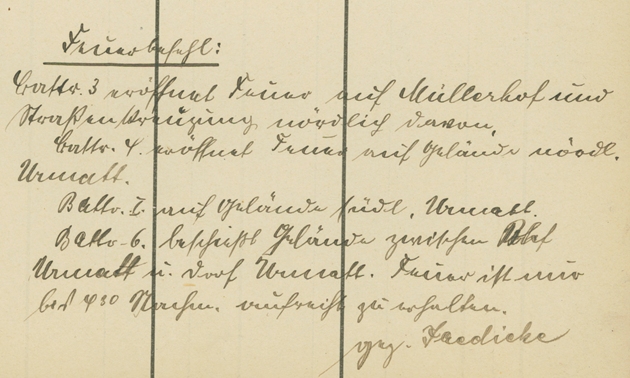
The governor of Strasbourg, General Magnus von Eberhard, gave the order on August 18, 1914 to the commander of La Feste to launch an offensive in the Bruche valley to repel the French troops who had taken up position on August 15 at Lutzelhouse.
Nearly 2,000 infantry from the Fort’s garrison will be sent in the direction of Urmatt and, around 4 p.m., the 14 10cm guns will fire a total of 291 shells in the direction of Urmatt / Lutzelhouse in support of their progress.
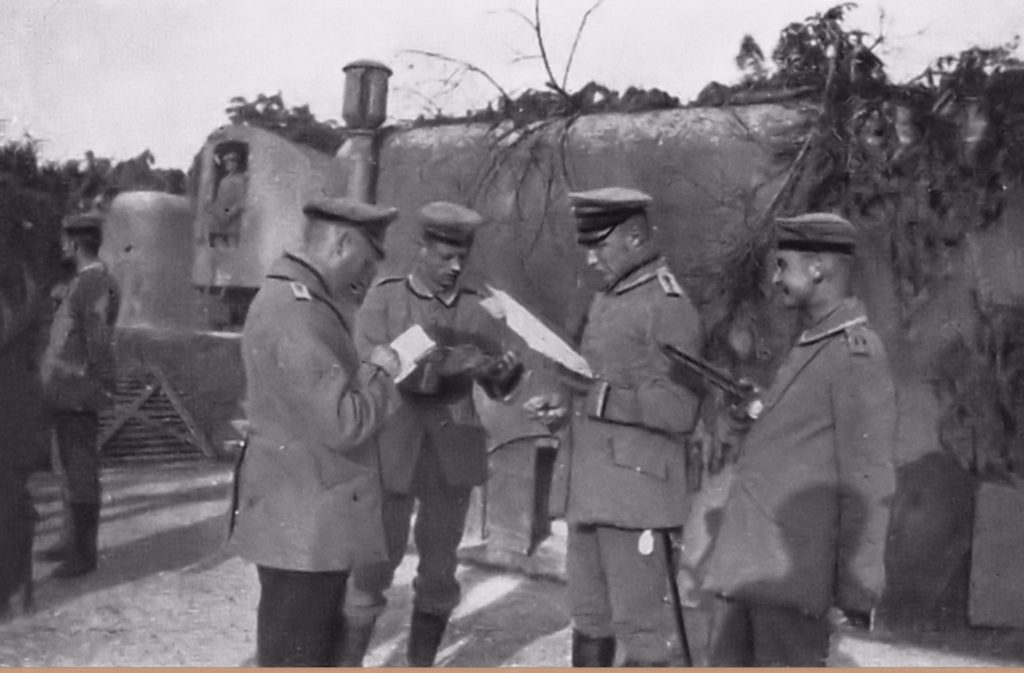
Preparation for the August 18 firing.
The enemy was out of range of the 105 guns (maximum firing range 10,800m.). The aim of the firing was above all to show that the lock of the Feste was indeed present and active. This small episode will have great consequences for Alsace: no more attempts at an offensive in the direction of La Feste and Strasbourg will be considered by the French command, thus preserving Alsace from the terrible destruction of the combat zones of the first world War.
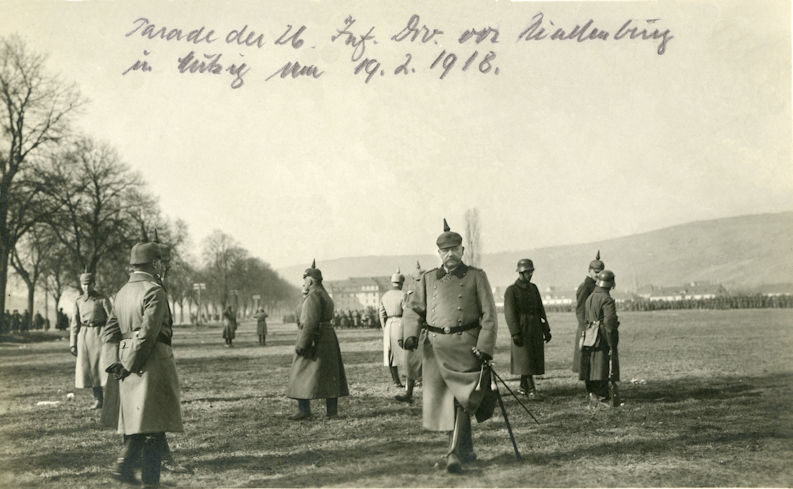
The visit of Marshal von Hindenburg on February 19, 1918
The photo shows Field Marshal von Hindenburg surrounded by his officers with the troops in line, the infantry barracks and the hill of La Feste in the background. Due to military secrecy there are no known photos of VIP visitors to the Feste.
A few months later, French troops will arrive in Alsace and the Feste Kaiser Wilhelm II will become the “Position of Mutzig” .