1914 TRIAL BY FIRE
SUMMARY :
⟩ HISTORICAL INTRODUCTION
⟩ DESCRIPTION OF THE FESTE
⟩ PICTURES
⟩ GERMAN AND FRENCH FORTIFICATIONS 1870-1945
⟩ 1871 A NEW POLITICAL AND STRATEGIC SITUATION
⟩ 1871-1883 THE ERA OF DETACHED FORTS
⟩ 1883 THE BRISANCE SHELL CRISIS
⟩ 1886 REINFORCEMENTS: CONCRETE AND MANY MODIFICATIONS
⟩ 1893 THE ARMOURED FORTIFICATION
⟩ 1897 THE SPEADED FORTIFICATION
⟩ 1914 TRIAL BY FIRE
⟩ 1920-1939 DEFENSIVE LINES
⟩ 1939-1945 THE END OF FORTIFIED SYSTEMS
1914-1918 Trial by fire
War was declared on August 3, 1914. This colossal confrontation, which lasted more than 4 years, cost the lives of nearly 10 million soldiers and left nearly 20 million war wounded.
The fortifications will face the reality test: will they fulfil their role? Will they be able to resist an artillery whose means have been considerably increased in volume, caliber, power and firing range?
The Role of Fortifications
In France
The “Séré de Rivières” defensive lines were intended to protect the borders with Germany and Italy and serve as the first troop concentration area.
Plan XVIIb of the French General Staff provided for an offensive in southern Alsace and Lorraine in the direction of Morhange, proving that Kaiser Wilhelm II’s fortress had played a significant deterrent role.
In fact, as early as 1904, the secret services had shown the enormous strength of the Feste. The means necessary for an attack would have required about 220 siege guns and 70,000 men!
Nor was there any provision for an offensive in the direction of the mighty fortress of Metz.
Both offensives failed.
In Germany
Germany was faced with a war on two fronts more than 1,400 km apart, and it was outnumbered, with about 4.3 million soldiers compared to 9.5 million for the Triple Entente. The fortifications of Metz-Thionville and Strasbourg-Mutzig were to protect the left flank from the “Schlieffen” offensive which consisted of bypassing the French defensive lines through Belgium and freeing up troops (a modern fortification freed 9 out of 10 soldiers).
Belgian fortifications August-September 1914
The Battle of Liège began on 5 August and ended on 16 August. Precious time was wasted by the illusion of a coup de main without artillery preparation. The forts were bombarded by German heavy artillery and were only able to hold out for a few days.
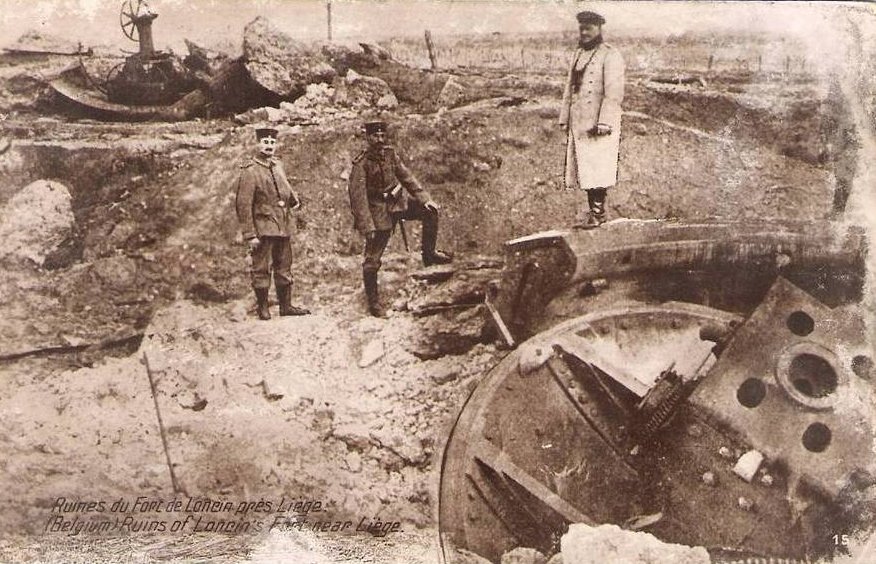
With the experience gained in Liège, the German army carried out an intensive bombardment of the Place de Namur from 20 to 25 August 1914 and obtained the surrender without many losses.
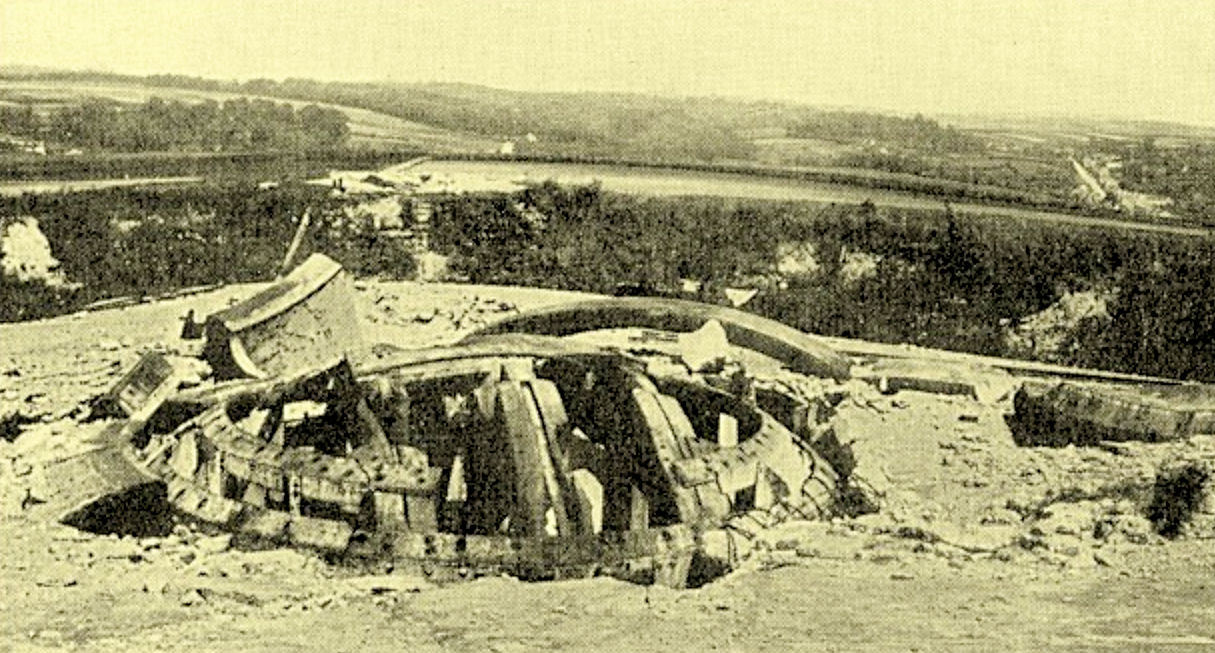
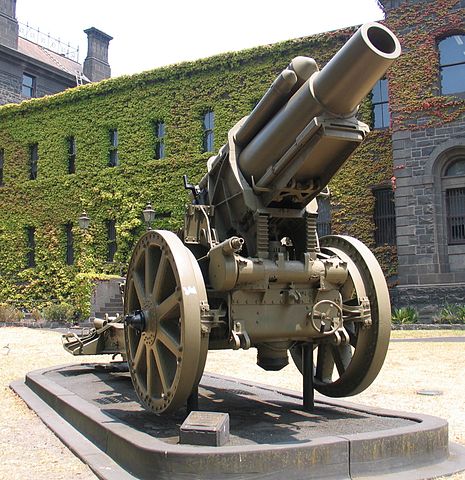
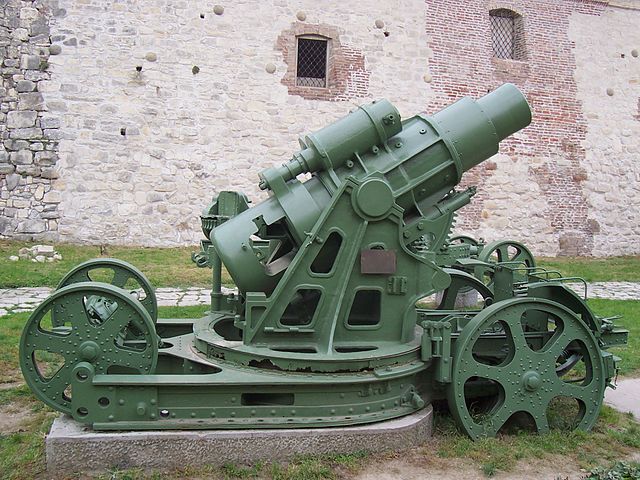
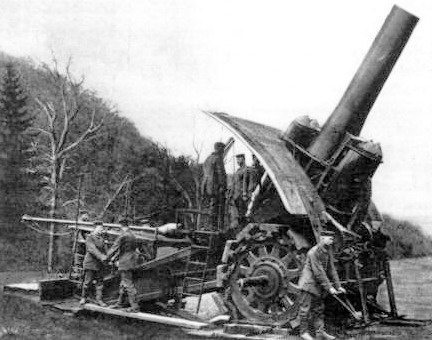
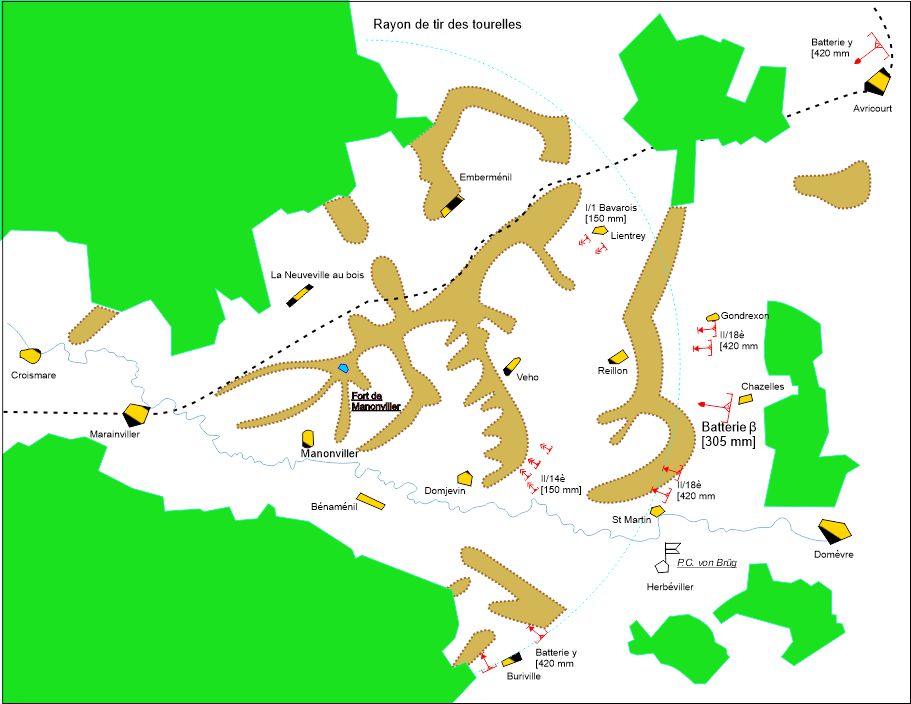
25 to 27 august 1914: The Siege of Fort de Manonviller
The bombardment began on 25 August 1914 and ended with surrender on 27 August.
The means used: 40 210 mm howitzers, one 305 mm howitzer and one 420 mm howitzer were positioned out of range of the 4 turrets (2 Mougin and 2 Galopin) of the fort. 4,596 210 mm shells, 134 305 mm shells, and 59 420 mm shells were fired.
On the first day, one of the 155 turrets was taken out of service and a stock of 2,200 57 and 80 shells was blown up. On the 26th, two more 155 turrets were eliminated and a stock of 800 155 shells was blown up. At 4:20 a.m. on the 27th, two German 420 mm howitzers went into action; The fourth turret of 155 was blocked, the garrison was asphyxiated.
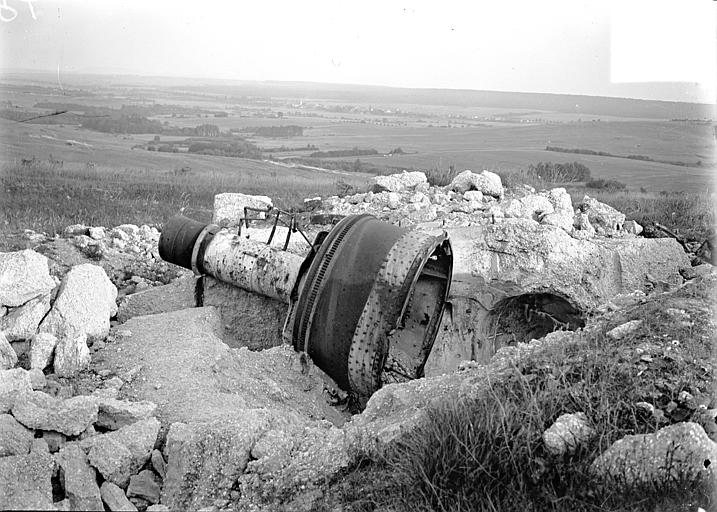
21-25 February 1916: the fall of Fort Douaumont
The fall of the Belgian forts and that of the Fort de Manonviller shattered the confidence of the General Staff in the fortifications. The interval artillery will be withdrawn as well as part of the ammunition stock. The garrison will also be reduced. It was in this context that the Battle of Verdun began with the attack on Fort Douaumont on 24 February 1916.
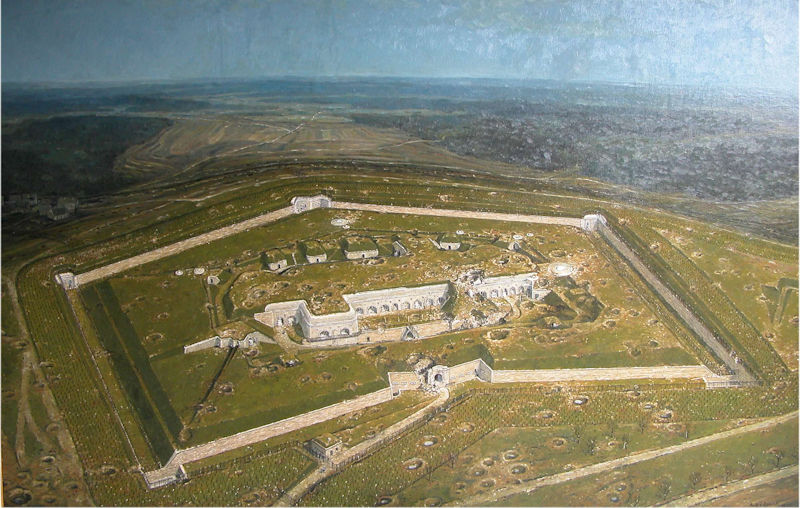
The fort had only one 155 R Galopin turret model 1907
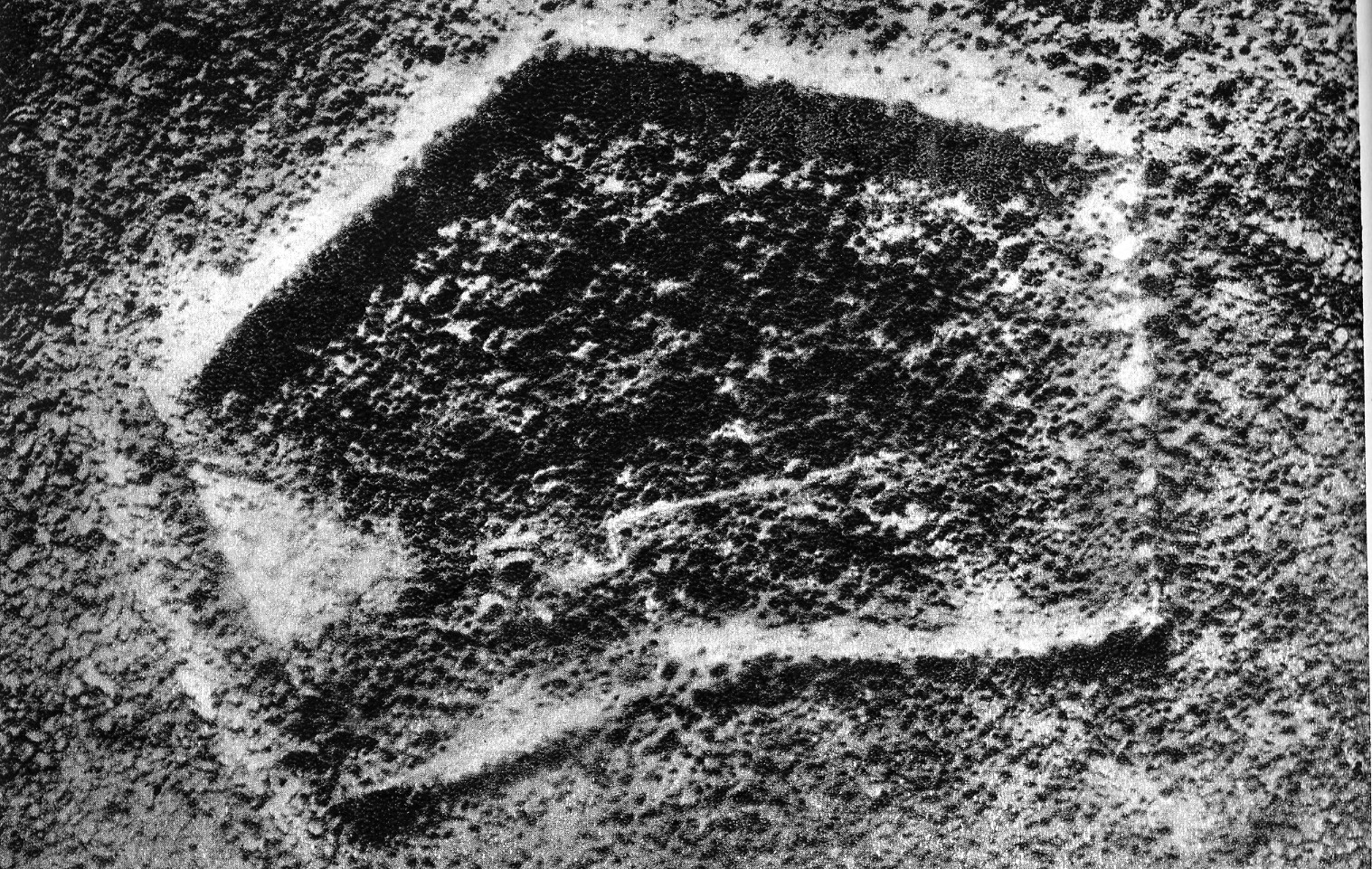
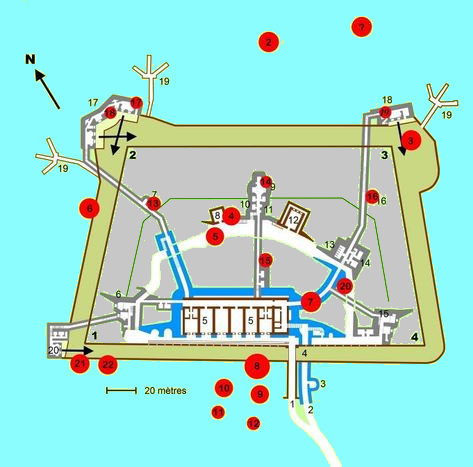
7 march to 7 june 1916: The Siege of Fort de Vaux
The small fort of Vaux was held by a garrison of 250 men. It was equipped with a 75 mm turret as part of the 1904 reinforcement. This turret exploded in February 1916 as a result of German bombardment. It took an average of 8,000 shells a day. The resistance of the garrison was absolutely impressive despite the increasingly advanced state of destruction of the fort. The cracking of the water cisterns forced the garrison to capitulate.
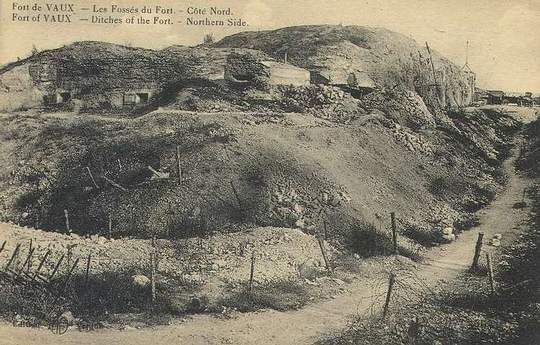
It is difficult to recognise a fort in this heap of ruins. At the top left you can see the two firing crenellations of the Bourge casemate and on the right the gorge ditch.
Conclusion
These major sieges, 1914-1916, demonstrated that the heavy masses were completely overwhelmed, that only reinforced concrete provided acceptable protection, that the firing radius of the turrets was absolutely decisive in keeping the enemy artillery out of range.
But they also highlighted many facts:
- Only a deep burial, at least 30 m, made it possible to shelter the garrisons of the forts
- Only electrification could solve the problems of ventilation, communications, lighting, logistics, etc.
- Artillery observation means require powerful optics.