1893 THE ARMOURED FORTIFICATION
SUMMARY :
⟩ HISTORICAL INTRODUCTION
⟩ DESCRIPTION OF THE FESTE
⟩ PICTURES
⟩ GERMAN AND FRENCH FORTIFICATIONS 1870-1945
⟩ 1871 A NEW POLITICAL AND STRATEGIC SITUATION
⟩ 1871-1883 THE ERA OF DETACHED FORTS
⟩ 1883 THE BRISANCE SHELL CRISIS
⟩ 1886 REINFORCEMENTS: CONCRETE AND MANY MODIFICATIONS
⟩ 1893 THE ARMOURED FORTIFICATION
⟩ 1897 THE SPEADED FORTIFICATION
⟩ 1914 TRIAL BY FIRE
⟩ 1920-1939 DEFENSIVE LINES
⟩ 1939-1945 THE END OF FORTIFIED SYSTEMS
1893 The Armoured Fortification
The main mission of a fortification is to dominate the road and rail networks within the range of its artillery. The protection of the guns became a top priority. Gone are the days of cannons positioned on top of forts.
The use of armour to protect artillery pieces had been considered for some years before the shell was fired at Brisance. But it was only with the advent of the steel industry that effective armour would be possible. As part of the reinforcements, numerous observation systems and some armoured turrets were installed. But the crisis of the brisance shell will require steel breastplates.
The armored fortifications
The explosive shell crisis forced the fortifications services to look for protective solutions for the artillery. In collaboration with artillery officers, the steel industry designed and produced a first turret made of hardened cast iron.
In France
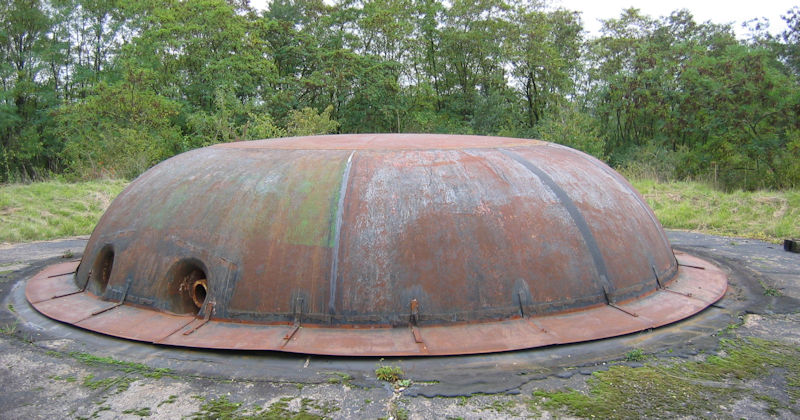
The commander of the engineers, Henri-Louis-Philippe Mougin, secretary of the “Commission des Cuirassements”, gave his name to a turret for two 155mm guns, at a cost of 205,000 francs. Twenty-five examples were installed between 1879 and 1887, built by the companies Châtillon and Commentry (in Saint-Chamond) and Schneider (in Le Creusot).
In Germany
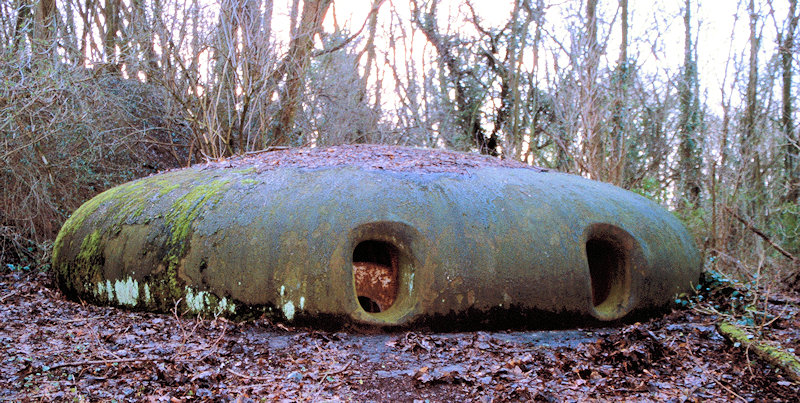
The engineer officer Maximilian Schumann left the Prussian army in 1872 to devote himself to the development of battleships. In 1882 he merged his company with the Grusonwerke of Magdeburg. The turret of 1876 “Hartguss-Panzerthurm für zwei 15 cm Kanonen L 25 in Minimalscharten-Laffeten C 84/85”, made of hardened cast iron is armed with two 15 cm guns. 5 examples were set up in Metz, Cologne and Ingolstadt.
The armored fortifications
The hardened cast iron of these early turrets did not provide sufficient protection against new breakout shells. Around 18850 the steel industry was able, thanks to electricity, to produce heavy cast steel parts. A new period has begun.
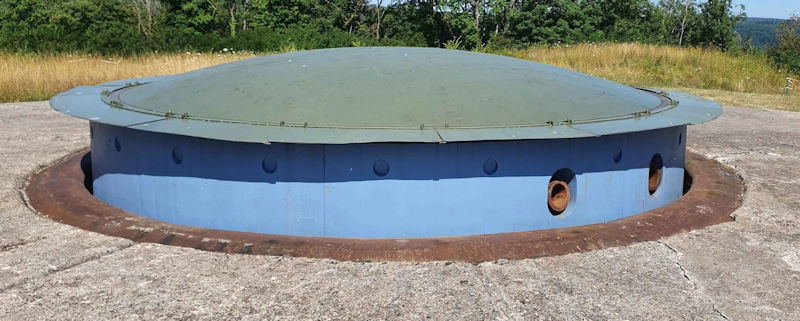
In 1889, Captain Alfred Galopin of the Cuirassements department presented the project for an eclipse turret. The considerable mass and its cost of 850,000 francs explain why it was only manufactured by the Schneider firm (in Le Creusot) and installed in only 5 units from 1891 onwards (Manonviller, Frouard (Batterie de l’Eperon), Pont-Saint-Vincent and Arches).
Firing range: 7,500 meters
Rate of fire: 4 rounds per minute
Cost: 800 000 F
Mutzig’s Comparative Tests: Eclipse or Minimal Embrasure?
8 eclipse turrets (6cmKiVl) and 8 minimal embrasure turrets (15cm TH), installed in teh East and Westforts, will undergo extensive testing to settle the debate between the two systems.
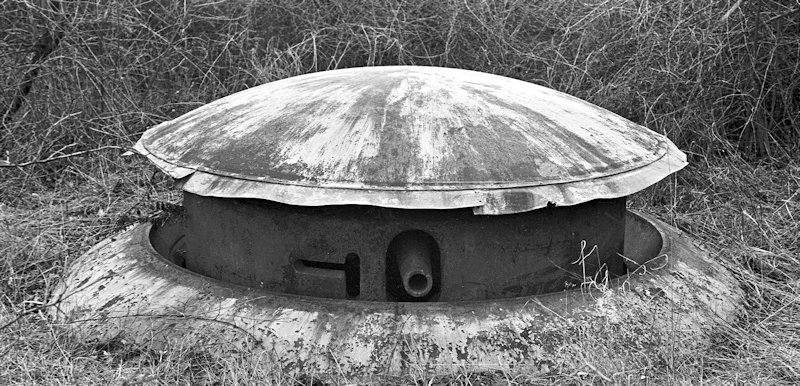
This disapearing turret will be the one and only German disapearing turret. Too expensive, too complicated, and underperforming.
Firing range (bullet cartridge): 500 m
Rate of fire: 25 rounds per minute
Cost: 51,110 F
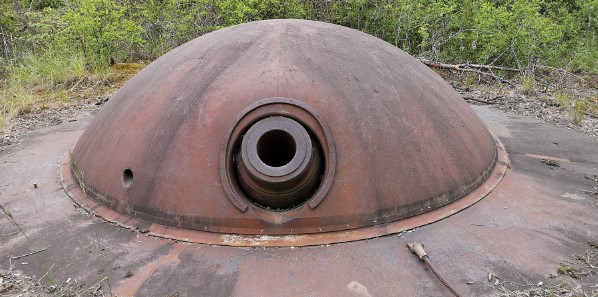
The first version (1893) was replaced after a series of 12 (8 for FKW II and 4 for Graudentz) by the 1895 version (46 turrets for Metz, 4 for Graudenz and 8 for Graudenz).
Firing range: 7,500 meters
Rate of fire: 2 to 4 rounds per minute
Cost: 87,563 F
In Germany, the General Staff wants to carry out a complete experiment to study the advantages and disadvantages of the two systems for protecting the fire embrasure. The future 10cm turret of the German Festen will only be developed after the validation of the so-called eclipse system or that of the minimal embrasure. To this end, in 1893-95 the Feste de Mutzig was equipped with 8 eclipses turrets and 8 turrets with minimal embrasures in order to provide practical answers.
The Age of Armor
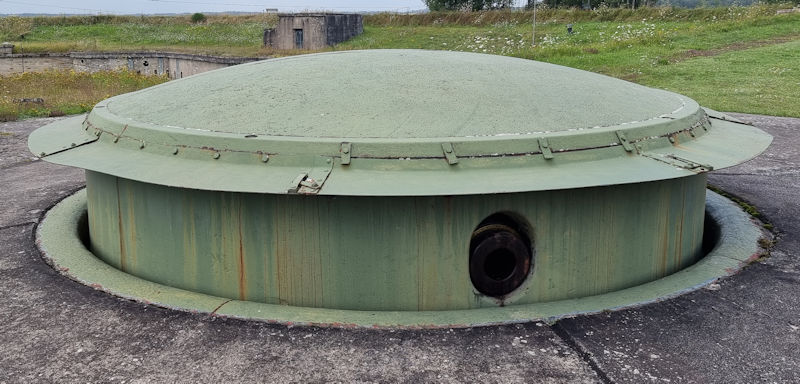
A single-gun version of the Galopin turret was developed based on the first version in 1892. Its diameter has been reduced and consequently the mass. The 155 R 07 gun has the same firing parameters as the gun of the 1892 version. On the other hand, the cost was reduced to 450,000 francs.
Twelve machines were installed (Uxegney, Douaumont, Le Roselier, Moulainville, etc.).
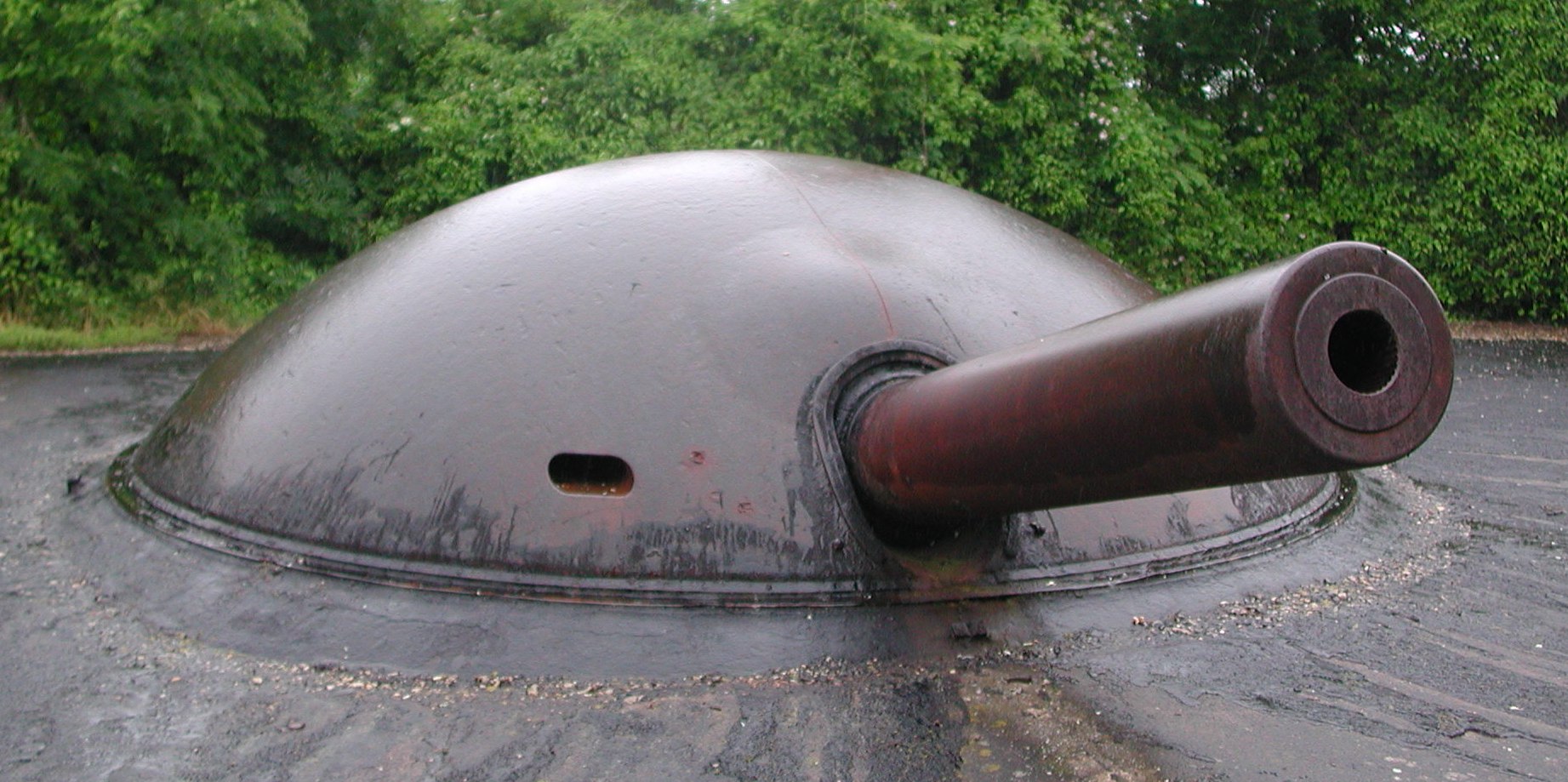
The two-year test in Mutzig made it possible to clearly identify the advantages of the minimal embrasure solution. The 10 cm turret will therefore be developed with this technique.
Firing range: 10,800 meters
Rate of fire: 9 shells per minute
Weight: 70 to 85 tons depending on the version
Cost: 197 300 F
69 turrets will be installed (Metz, Mutzig, Strasbourg and Thionville, only one in Thorn (Poland)).
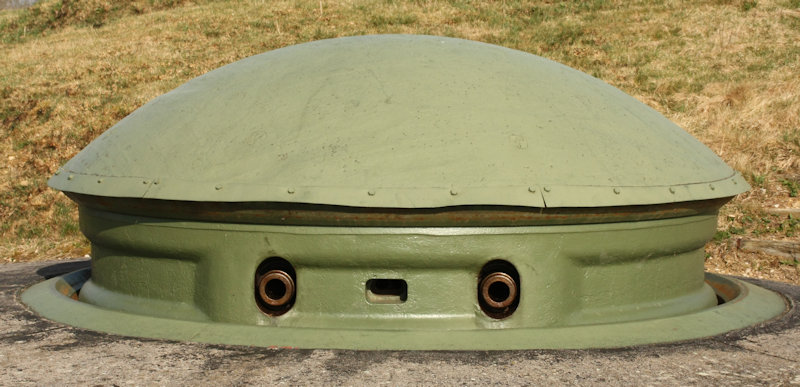
This eclipse turret is armed with two 75 mm guns. Firing range: 5,000 meters Rate of fire: 22 rounds per minute Weight: 85 tons Cost: 130,000 F 57 turrets of this type were installed between 1905 and 1914.
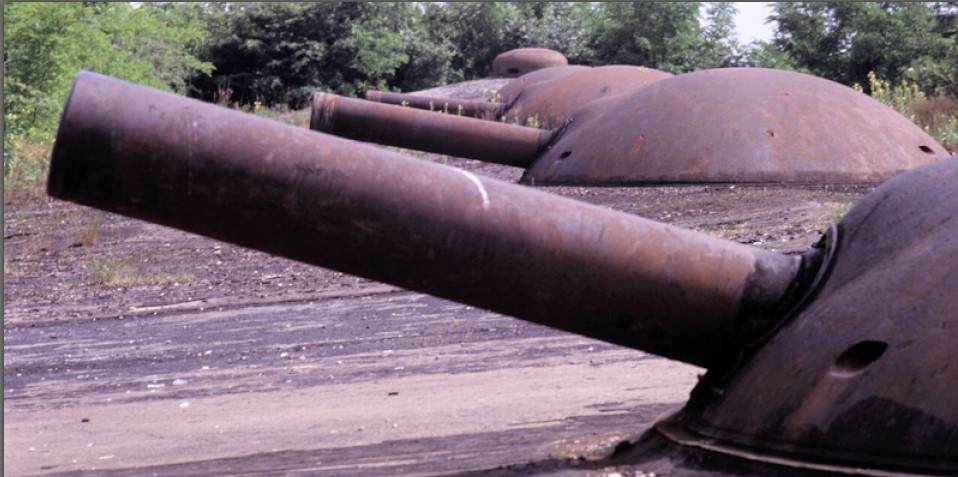
The German Festen had 2 to 4 batteries with 3 to 4 turrets for 10 cm guns that could fire breaker shells, bullet shells and shrapnel shells.
One battery consisted of 3 to 4 turrets, which represents an enormous firepower: 4 x 9 = 36 rounds per minute with a range of nearly 11 km.
Artillery Observation
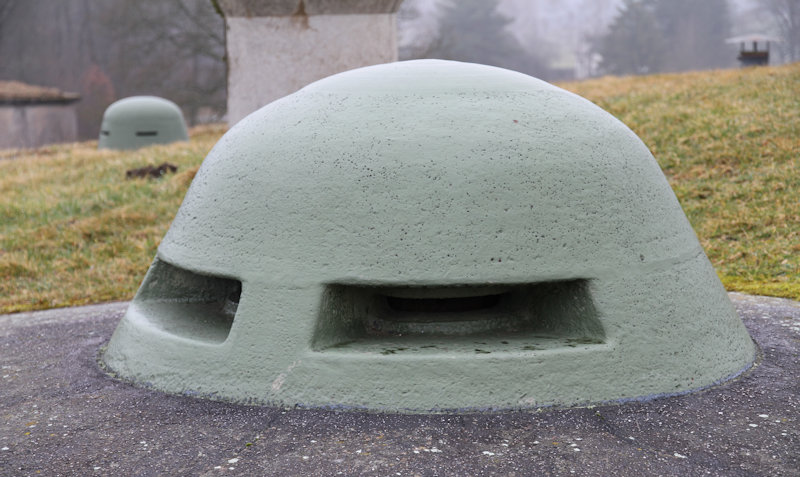
In France only one model of armoured observatory has been installed. It offered a small target, was well protected by 20 cm of armor but offered little space and prohibited the installation of high-performance optics. Weight: 7.5 tons Cost: 7,000 F
Around 175
About 175 type observatories have been deployed.
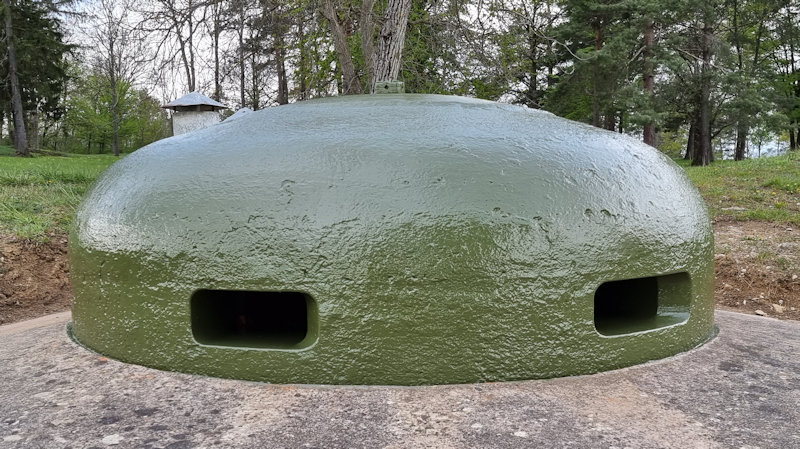
This observation bell was an advantageous replacement for the first two turrets (94 and 96), which were too expensive. It had a binocular refractor with a magnification of 6.5 to 13x.
Weight: 21,850 tons
Cost: 117,931 F
About thirty have been installed.
The covering of intermediate areas
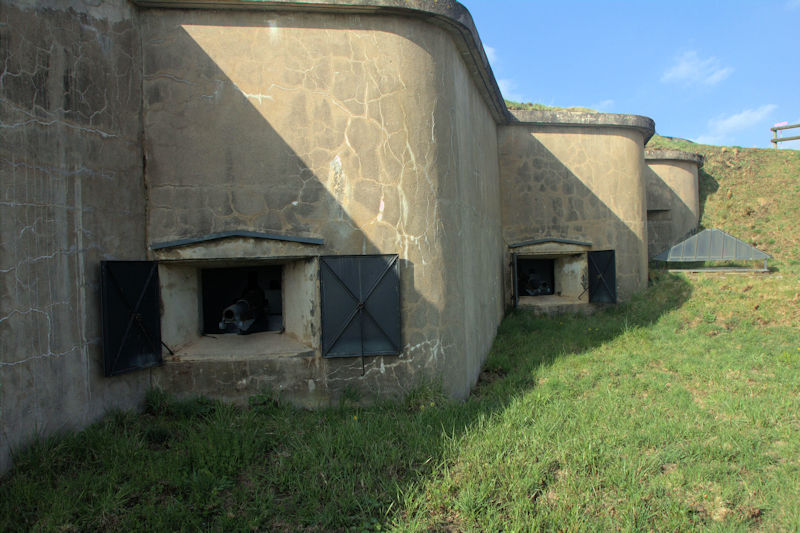
The tests carried out in Bourges led to the adoption in 1899 of the casemate flanking the defence line called the “Casemate de Bourges”. The two 95 mm guns model 1888 were replaced from 1902 by two 75 mm guns with rapid fire (28 rounds per minute).
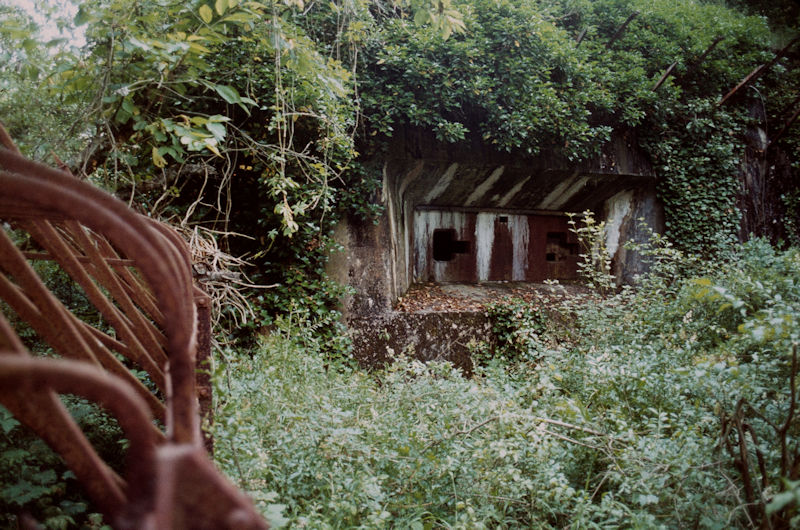
From 1909 onwards, a dozen armoured casemates for 2 77mm guns were installed in the Metz festen and at the Feste Istein. Their role was quickly taken over by machine gun casemates, which were much cheaper and more flexible.