1886 REINFORCEMENTS: CONCRETE AND MANY MODIFICATIONS
SUMMARY :
⟩ HISTORICAL INTRODUCTION
⟩ DESCRIPTION OF THE FESTE
⟩ PICTURES
⟩ GERMAN AND FRENCH FORTIFICATIONS 1870-1945
⟩ 1871 A NEW POLITICAL AND STRATEGIC SITUATION
⟩ 1871-1883 THE ERA OF DETACHED FORTS
⟩ 1883 THE BRISANCE SHELL CRISIS
⟩ 1886 REINFORCEMENTS: CONCRETE AND MANY MODIFICATIONS
⟩ 1893 THE ARMOURED FORTIFICATION
⟩ 1897 THE SPEADED FORTIFICATION
⟩ 1914 TRIAL BY FIRE
⟩ 1920-1939 DEFENSIVE LINES
⟩ 1939-1945 THE END OF FORTIFIED SYSTEMS
1886 Reinforcements: Concrete and modifications
The number of fortifications erected since 1872 is impressive. It was totally impossible to replace them with new constructions or even to strengthen them all.
Staffs throughout Europe were faced with the problem of reinforcing existing fortified works and developing new standards and construction techniques.
In France
France had succeeded, driven by the fear of a new war with the German Empire, to complete most of the program designed by General Séré de Rivières in record time, it could not launch a program of new constructions. Several phases of reinforcement will be launched depending on budgets and the development of technical solutions.
The defense committee was abolished in 1889, and the Haute Commission des Places Fortes took over in 1899.
In Germany
The first phase of building the detached fort belts around the main strongholds of the empire was completed. However, many projects have been put on hold while new construction standards are in place and most exposed forts are reinforced.
The “Landesverteidigungskommission” (Commission for the Defence of the Country) chaired by the Emperor was composed of the main chiefs of the army. A committee of engineers “Ingenieur Komitee”, created in 1874, was responsible for coordinating all research and testing in the field of fortifications and for developing new standards in the form of technical regulations “Technische Vorschriften” (classified as a defense secret).
Reinforcement of the building
Concrete will significantly increase the resistance capacity of structures to breaker shells. Faced with the enormity of the costs, states will have to prioritize fortifications by their strategic importance and manage priorities.
In France
The reinforcement of the structures is carried out by the addition of so-called special concrete shells for all or part of the most important forts.
In Germany
Concrete will be used on a massive scale for the main structures by adding a 1-metre-thick slab to the masonry vaults. The space between the vault and the slab is filled with sand.
Special concrete
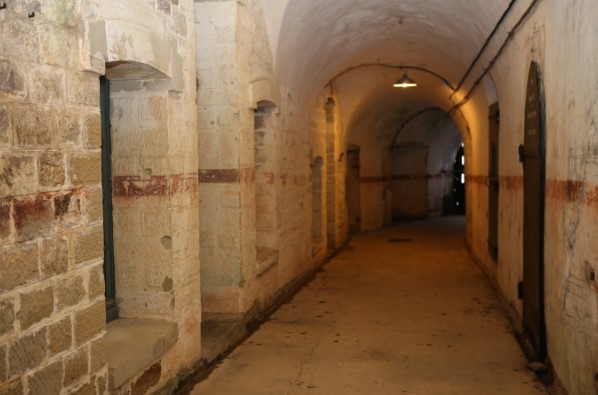
Areas with special concrete protection are marked with a red band.
Cutting of the roof of the main barracks
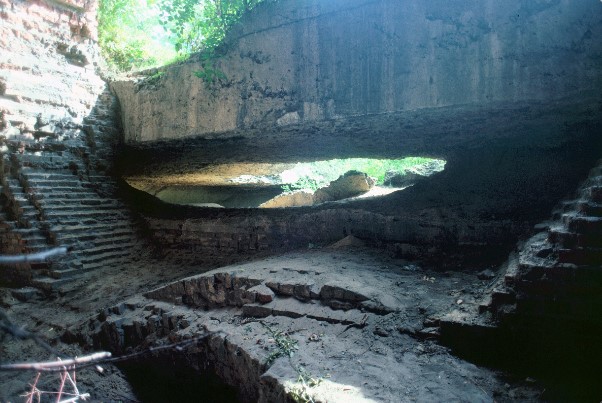
This cross-section shows the original vault and concrete slab. The sand and some of the bricks were salvaged after 1945, showing the extent of the work undertaken.
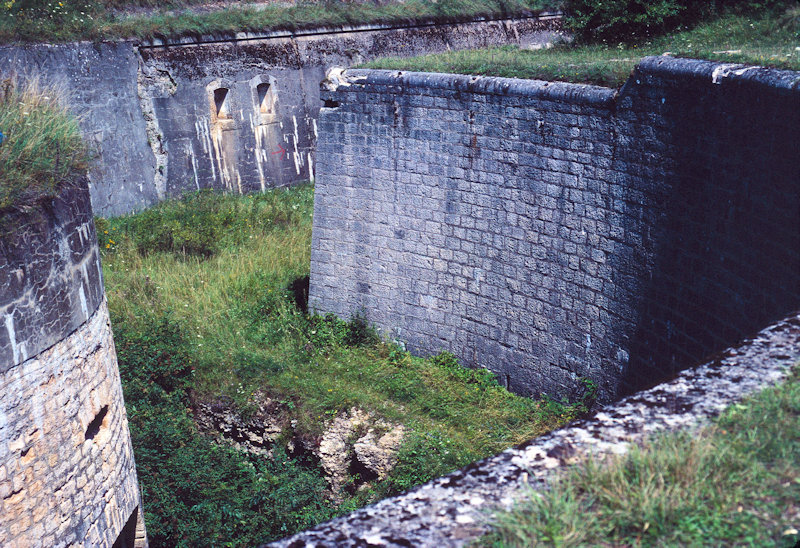
Part of the facades will be protected by a new concrete wall. Some of the windows will be preserved. On the other hand, neither the scarp nor the counterscarp will be reinforced. However, the pillbox (on the left of the photo) was fitted with a 1-metre-thick concrete slab.
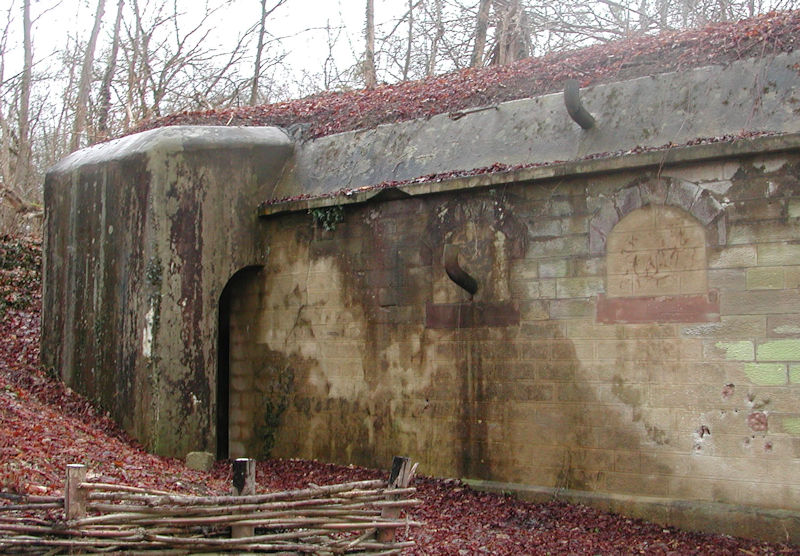
The entrances are protected by the addition of a concrete block creating a baffle and the original windows are bricked up. The concrete slab that covers the roof is clearly visible. Ventilation will be provided by electric ventilation.
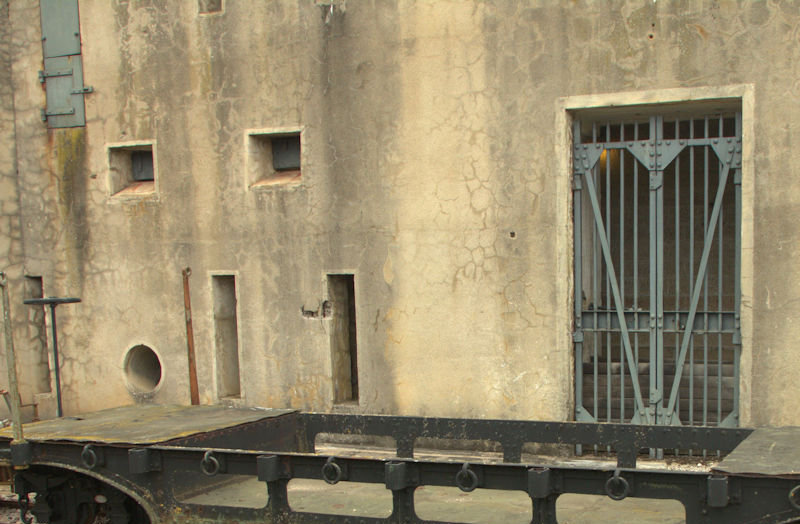
The addition of a new concrete façade in front of the original facades requires ventilation through numerous openings that are more or less protected.
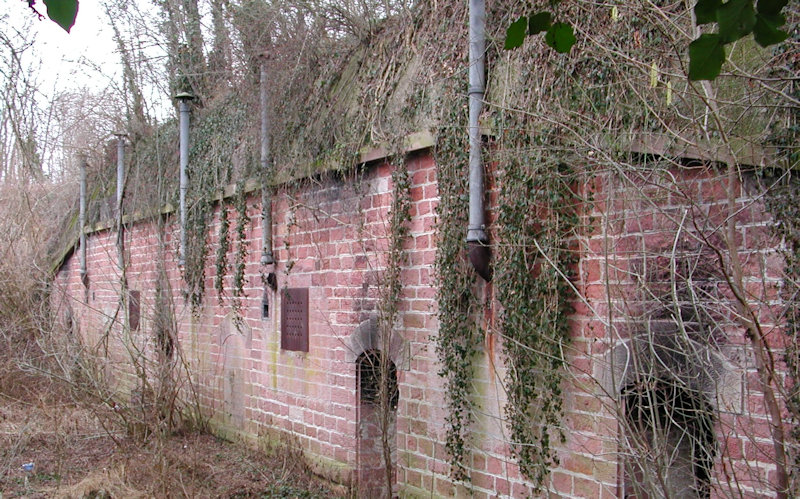
The original windows are boarded up, as are some of the doors. The perforated armor plate protects an air intake for electrical ventilation. The facades will not be lined with a concrete shell.
Relocation of the ditch weirs to the counter-escarp
The caponiers flanking the ditches projecting from the escarpment had become too vulnerable. They were replaced, for the most exposed forts, by counterscarp chests, connected to the main postern by a gallery passing under the ditch.
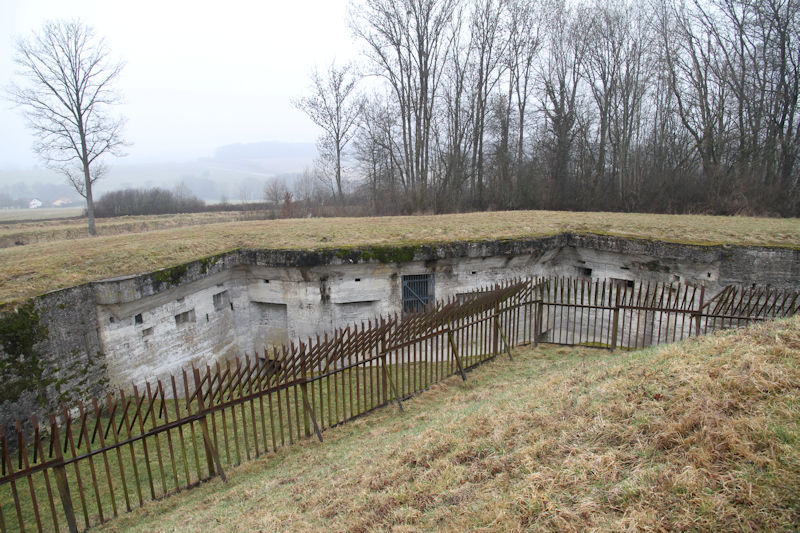
The armament of the new pillboxes consisted of 40mm revolver guns and “12 culasse” cannons.
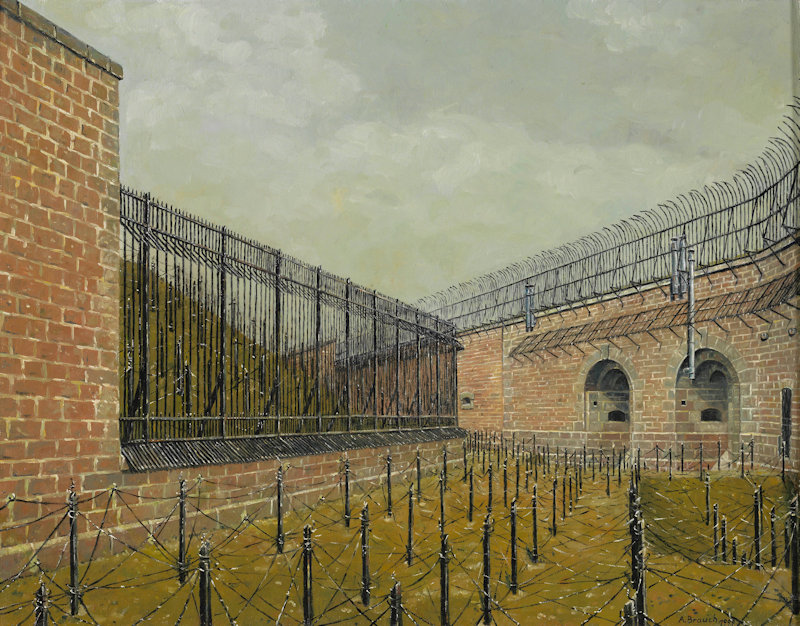
These pilboxes were first armed with “Hotckkiss” revolver barrels and then, from 1886, with 5cm rapid-firing “Gruson” cannons.
The artillery is moved to the outside
Similarly, conons positioned on the roofs of structures are far too vulnerable. The most exposed forts will be equipped with new outer artillery batteries
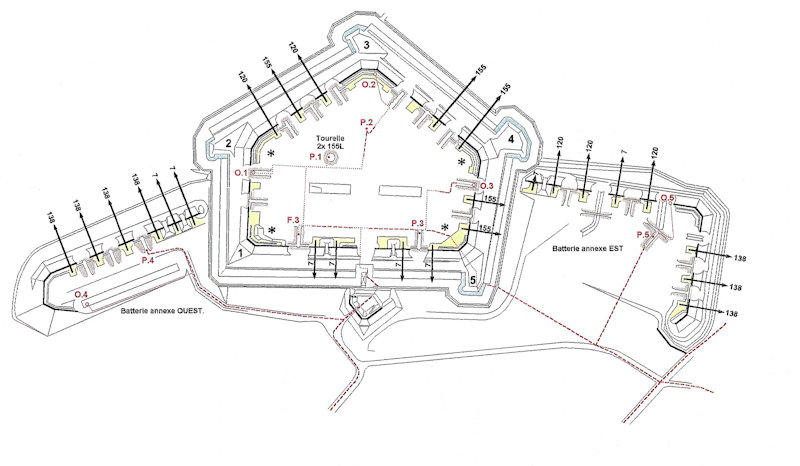
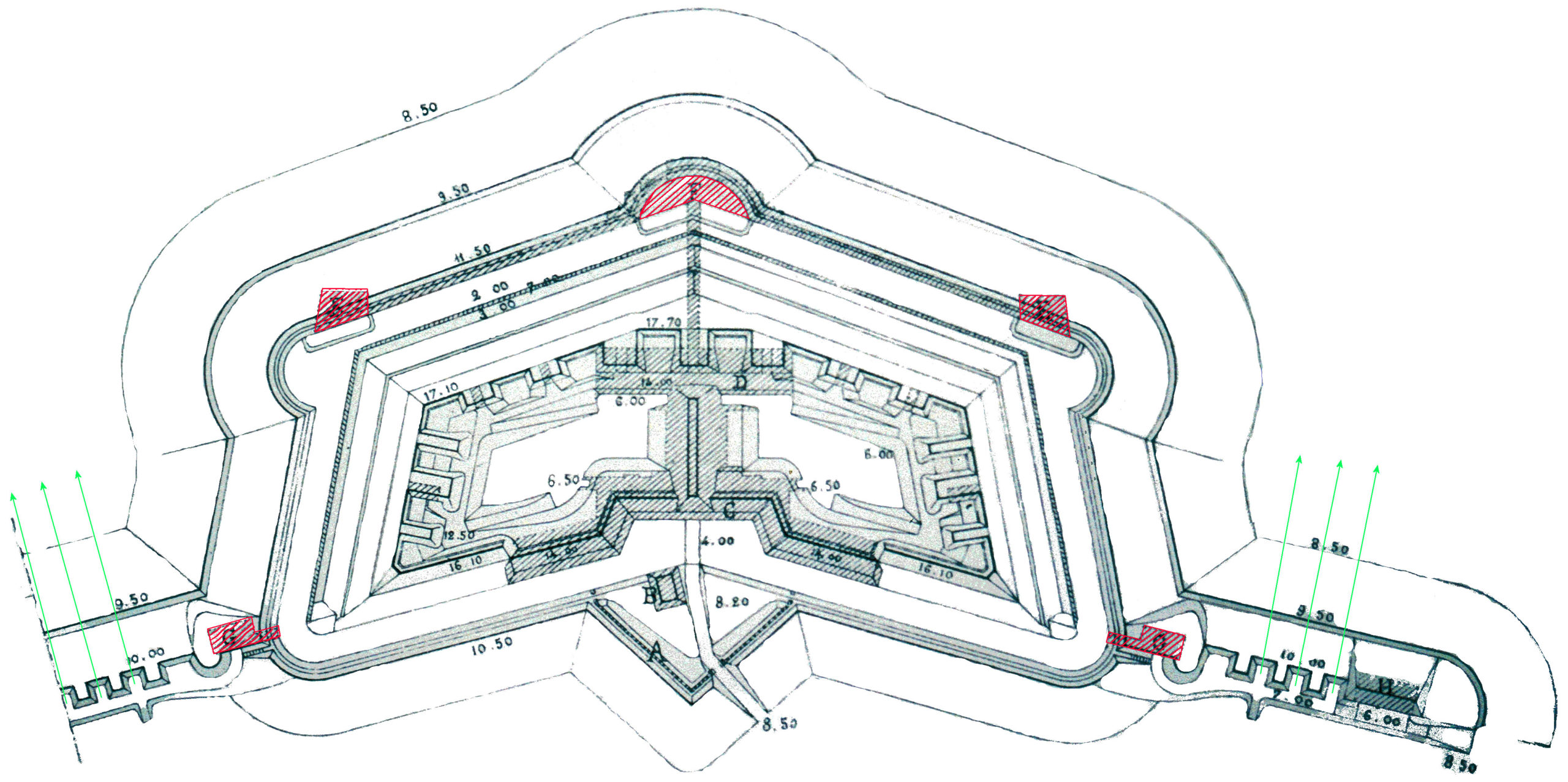
New construction
France, having a very large park of forts, will be content to improve the intervals with small concrete structures. In Germany, on the other hand, the plan of attack named after General von Schlieffen called for the bypassing of the French defensive lines by Belgium. It will be essential to protect the southern flank from the future offensive. The construction of new fortifications will become essential. The Festen era began with the Kaiser Wilhelm II Feste in Mutzig, the construction of which was to resolve many questions and to begin a technical and architectural revolution.