THE SECOND WORLD WAR
Feste Kaiser Wilhelm II – 1939-1945
La Feste, french since 1918, will play a secondary role during the Second World War.
It will serve as a fallback zone for the command of the artillery in the Strasbourg zone.
The 155th artillery regiment occupies the batteries of the Position of Mutzig..
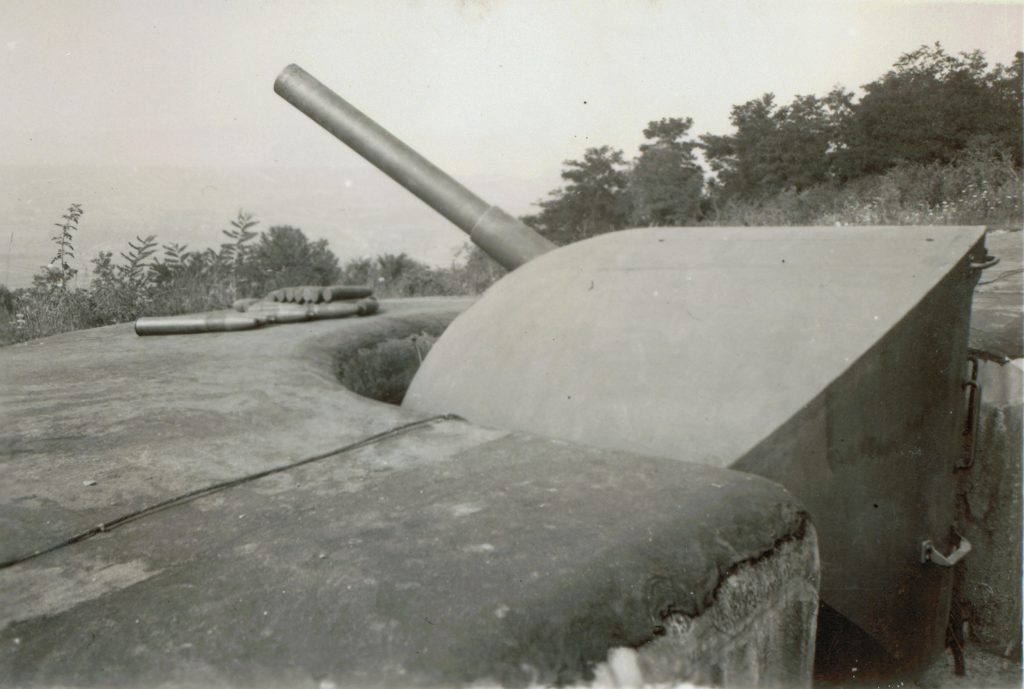
French firing June 20-22, 1940 (155 RAP).
The German scouts emerge from the Kronthal on June 20, 1940, the French artillerymen open fire with the guns of battery 1 in the direction of the road near Wangen.
The garrison receives the order in the evening to sabotage the guns and to retreat to the heights of the Vosges.
The attack of June 23, 1940
The French fire coming from the Fort resulted in the request being made for air support for an attack on June 23, 1940.
The withdrawal of the French troops explains that the German troops arrived at the Fort without any combat and were to be bombarded by their own planes. 83 soldiers were killed that day.
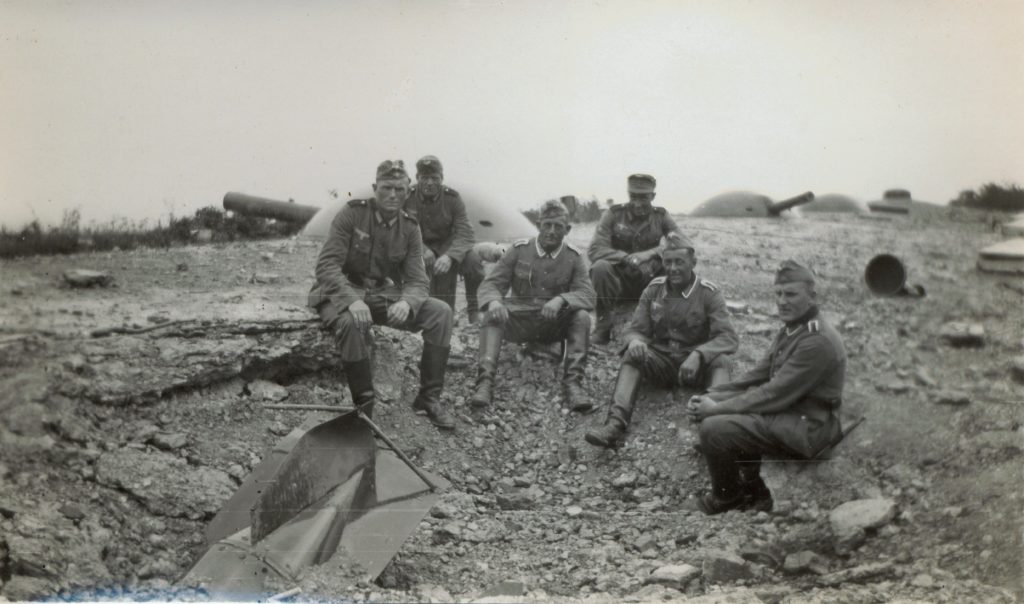
The photo shows a group of soldiers a few days after the fighting in front of a bomb crater with an unexploded bomb at Battery 6.
The German command gave the order to the troops who were at the fort to hold out at all costs.
A group of just over a hundred soldiers from various units were at the fort when American troops from the 3rd DIUS arrived in Mutzig. The German command (AOK) gives the order: “The Bruche valley must remain locked under all circumstances for the long term. If necessary, the people affected there must allow themselves to be killed.
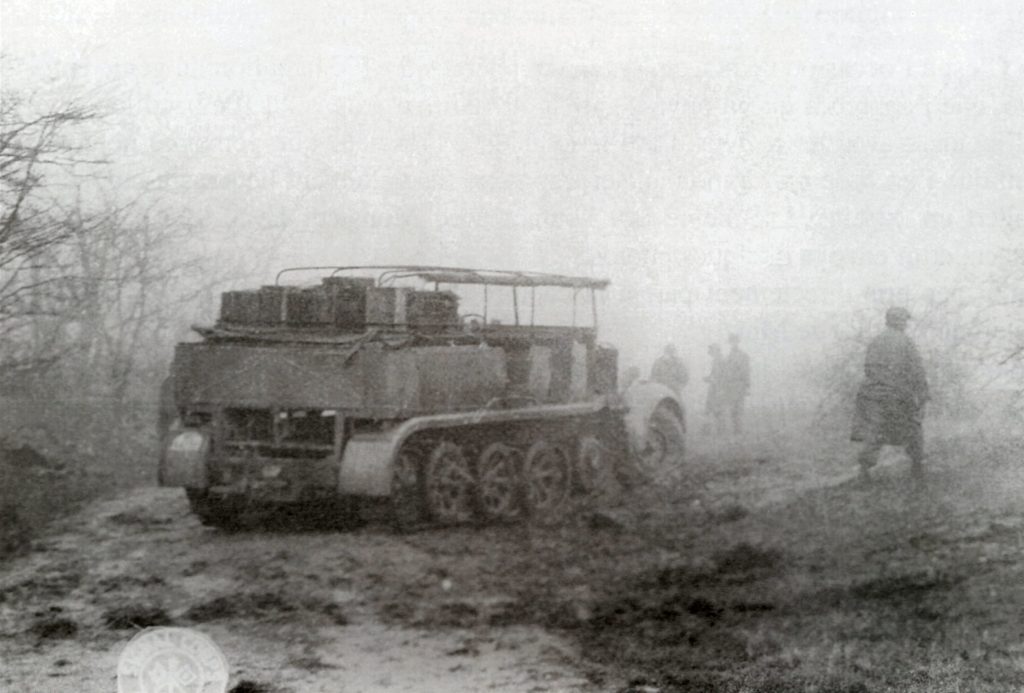
Soldiers of the 10th Engineer Combat Battalion will use an artillery tractor loaded with 3 tons of explosives to breach the East Fort gorge front wall to dislodge the German soldiers.
The next day, running out of food and ammunition, Major Rabbow who commands the German troop agrees to surrender.
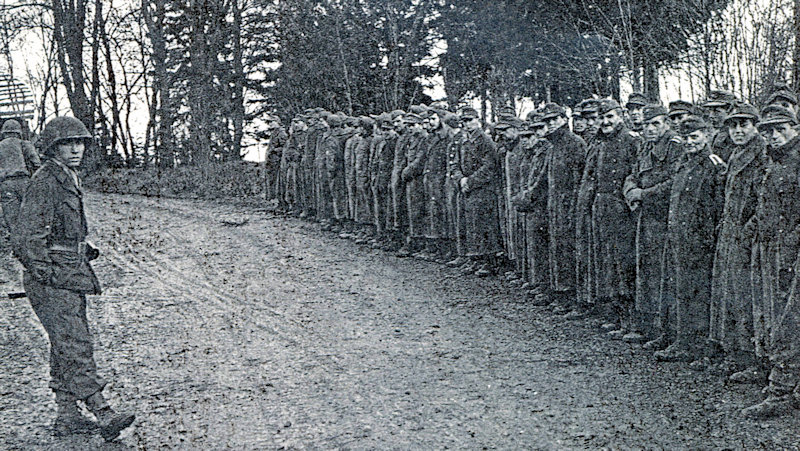
The photo shows the column of German soldiers, tired, probably starving but most certainly relieved to be alive and that for them the war is over.